Tuesday, 9 December 2025

Malaysia’s retail pharmacy boom draws billion-ringgit bets as IPO pipeline builds


Malaysia’s retail pharmacy boom draws billion-ringgit bets as IPO pipeline builds

The catalyst – news that BIG Caring Group is weighing a blockbuster listing in Bursa Malaysia next year

Tan Ai Leng
Published Mon, Dec 8, 2025 · 07:00 AM

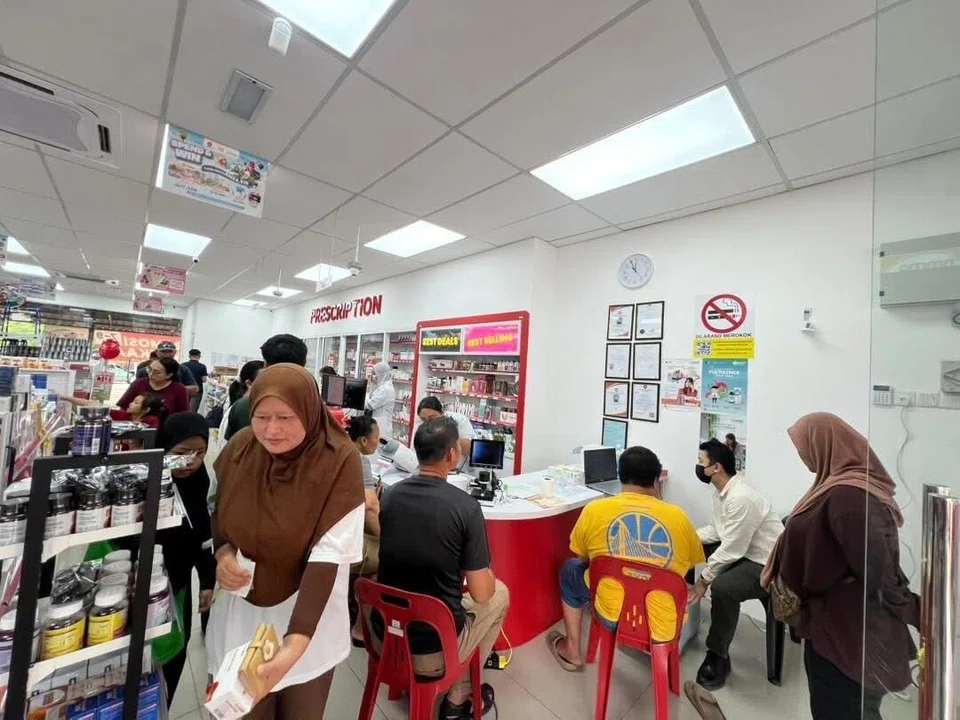
[KUALA LUMPUR] Malaysia’s retail pharmacy sector is becoming a key dealmaking arena, as private equity firms, regional players and local healthcare chains scale up ahead of a potential wave of major healthcare-retail initial public offerings (IPOs).

The catalyst – news that BIG Caring Group is weighing a blockbuster listing in Bursa Malaysia next year. The merged chain, formed through BIG Pharmacy’s acquisition of 7-Eleven’s Caring Pharmacy in July 2023, could seek a valuation of up to RM20 billion (S$6.3 billion) and raise as much as RM6 billion, Bloomberg reported.

Such a deal, if realised, would dwarf the RM5.2 billion raised in IPOs on Bursa Malaysia so far this year and instantly rank among the country’s biggest listings in a decade.

For investors, the proposed listing underlines how Malaysia’s pharmacy chains have matured into cash-generative, private equity-backed consumer-health platforms with diversified revenue and clear consolidation plans that suit public-market demand for stable, consumption-driven earnings.

Formed from the merger of BIG Pharmacy and Caring Pharmacy, BIG Caring Group is now Malaysia’s largest retail pharmacy chain, with more than 600 outlets nationwide. PHOTO: CARING PHARMACY/FACEBOOK

The sector’s transformation began post-Covid with a wave of mergers and acquisitions (M&A).

BIG Pharmacy’s RM850 million purchase of Caring Pharmacy in 2023, backed by private equity firm Creador, changed the competitive landscape overnight and created the country’s largest pharmacy operator.

Another significant example is Sunway Group’s acquisition of a major stake in Multicare Pharmacy in 2021, with this merged entity poised to become one of the pharmaceutical retail leaders by 2026.

Yulia Nikulicheva, head of research and consultancy at JLL Malaysia, said market consolidation has been a major catalyst for expansion in the retail pharmacy segment.

Pandemic-driven shifts in consumer behaviour – heightened health awareness, increased supplement consumption and a willingness to spend more on pharmaceuticals – fuelled exceptional sales, giving chains liquidity to expand even faster, she added.


She noted that regulatory flexibility further accelerated the trend. “During the pandemic, pharmacists were allowed to sell most medicines without a doctor’s prescription, except for Group A and B drugs. The measure reduced contact, but also shifted health-seeking patterns permanently, embedding pharmacies deeper into everyday care,” she added.

These dynamics produced an environment ripe for M&A, a trend now intensifying as operators seek scale, stronger bargaining power with landlords and better procurement economics.

Sarawak’s PMG Healthcare expands to Peninsula Malaysia

PMG Healthcare now operates around 200 pharmacies, 36 clinics and eight dental clinics. PHOTO: PMG HEALTHCARE/ FACEBOOK

One of the most aggressive consolidators now entering peninsula Malaysia is Sarawak-based PMG Healthcare.

Long the dominant primary-care operator in East Malaysia, PMG has begun stitching together a peninsula footprint through strategic acquisitions. For example, it acquired Johor-based AM PM Pharmacy in September 2024, Kelantan-based Farmasi Nazen early this year and Penang-based Siang Pharmacy in April, bringing its total number of outlets to 250.

PMG’s ambitions and valuation caught the attention of Singapore-based private-equity firm Ikhlas Capital, chaired by former CIMB Group chairman Nazir Razak, which had invested RM74 million in February for a “significant minority stake”.

In an interview with The Business Times, PMG Healthcare founder and managing director Chieng King Chong expressed the company’s ambition to list in Bursa Malaysia in three years.

“We are focusing on growing our size now; hopefully we can go listing in another two to three years. We are aiming for at least 500 outlets before listing,” he said.

PMG has acquired about 80 retail pharmacies for roughly RM60 million and now operates around 250 pharmacies, 36 clinics and eight dental clinics (in Sarawak), alongside 69 pharmacies in Peninsular Malaysia.

When it sealed its deal with Ikhlas Capital in February, the group operated just 152 pharmacies, 28 clinics and eight dental clinics, and it is now targeting 30 to 50 new outlets a year, Dr Chieng said.

Johor has become a strategic beachhead. “PMG is strong in East Malaysia, but in the peninsula, we need to build brand awareness. We will rebrand more than 40 outlets in Johor,” he added.

Organic growth is no longer efficient in crowded markets. “It does not make sense to just open more outlets in an already oversupplied market. We see mergers and acquisitions as the more viable option, as it gives us economies of scale (in procurement) and customer stickiness,” he added.

Dr Chieng believes the retail pharmacy market entered saturation after the pandemic. During Covid-19, pharmacies flourished from demand for masks, gloves, sanitisers, supplements and healthcare products.

“Now many that prospered during Movement Control Order (MCO) are suffering losses from the loss of customers,” he said, contributing to oversupply and price competition.

The MCO, similar to Singapore’s Circuit Breaker, was a series of national quarantine and cordon sanitaire measures, enforced by the Malaysian government from March 2020.

The move was meant to restrict movement, gatherings and non-essential business operations to curb the spread of the Covid-19 pandemic.

Dr Chieng warned that prolonged price wars damage valuations, discourage investment and weaken local players even as foreign competitors loom. “Sooner or later, foreign pharmacies will come in, such as those from China. Malaysian home-grown brands should prepare for that challenge,” he said.

R Pharmacy: A new challenger from across the Causeway

R Pharmacy has 26 outlets in Malaysia, including one in TRX. It plans to expand its footprint into local shopping malls. PHOTO: R PHARMACY WEBSITE

Parallel to PMG’s chain-building strategy, a new investor-backed challenger – R Pharmacy – is carving out a different path.

Formed in 2022 as a joint venture in which Singapore Exchange-listed Enviro-Hub Holdings holds an indirect 40 per cent stake, the chain has expanded to about 25 outlets, with 10 in shopping malls.

Its CEO Adrian Toh, who is also the executive director and chief investment officer, said R Pharmacy is now strategising its footprint as office crowds return.

“We are moving closer to working populations and lifestyle destinations such as TRX. That gives us steady weekday traffic and weekend tourist flows,” he said. TRX is the Tun Razak Exchange, Kuala Lumpur’s financial centre and mixed-development hub.

The chain also recently opened at The Campus in Kuala Lumpur (a school-turned-shopping mall) in May, and plans further mall rollouts, including KLGCC Mall.

But the chain’s strategy diverges sharply from that of mainstream operators.

Toh noted that rather than competing on price, R Pharmacy positions itself as a mid-to-upper tier concept, with 40 to 50 per cent of its space devoted to supplements, 30 per cent to prescription medicines and 20 per cent to rehabilitation equipment. Its stores average around 2,000 sq ft in size.

Around 30 per cent of its revenue, which was undisclosed, already comes from fast-beauty products -– influencer-led skincare and high-rotation beauty items – with a target of 40 per cent to 50 per cent.

R Pharmacy differentiates itself through curated product breadth rather than low prices. Toh draws inspiration from South Korea’s Olive Young, a fast-beauty juggernaut valued for its premium assortment and trend-driven consumer engagement.

He noted that the chain carries multiple stock-keeping units (SKUs) for premium supplement and skincare brands, where its competitors carry only one or two.

“When others offer one SKU, we carry 12 to 13 SKUs. We give customers choices,” he said. It is also the first in Malaysia to introduce NMN supplements and has exclusive partnerships with influencer-led skincare and haircare brands.

The strategy targets younger, working consumers with “grab-and-go” habits. R Pharmacy even sponsored K-pop concerts by artistes such as Jacky Cheung and Super Junior to build brand stickiness among youth segments.

Toh believes the market is increasingly polarised between very large chains that rely on volume and homogenised products, and smaller players that must specialise sharply to survive.

“Big players need top line and bottom line, so they sell very homogeneous goods and take up very large spaces. Smaller players must find their forte,” he said.

He also avoids direct price wars with the giants. “They may come to your area and cut prices. That becomes a lose-lose situation. We prefer to offer products people cannot find elsewhere,” he said.

R Pharmacy is also cautious in its geographic growth. While scoping out Johor, Toh said expansion would be phased carefully with an eye on logistics and distribution considerations, especially with the upcoming Johor-Singapore RTS expected to change consumer flows.

A market still in motion

Despite different approaches, PMG and R Pharmacy agree that Malaysia’s retail pharmacy market is still consolidating. New players will emerge, but survival hinges on scale, positioning and funding.

Dr Chieng sees fear of elimination as a key growth driver. Toh, on his part, emphasises clear positioning to avoid commoditisation. Macro trends such as the ageing population, rising incomes and population growth will boost pharmaceutical spending, especially in Klang Valley, Penang and Johor.

Geena Poon, director of research and consultancy at JLL Malaysia, noted that e-commerce, where health products rank among top online purchases, adds competitive pressure.

Growth in suburban retail and new townships will support pharmacy openings, but competition will intensify and margins will stay tight, she added.

From a property-market perspective, Poon said mergers often trigger portfolio rationalisation. “After a merger, a company would strategise on its portfolio and overlapping locations may be closed, creating retail vacancy in certain areas,” she added.

Yet, larger groups also gain strong negotiating leverage with landlords. Bulk rental negotiations across multiple locations can influence benchmarks, but Poon believes the overall effect remains positive.

“Overall, we believe that there is a positive effect on the market, as the new company is able to expand faster in various formats, which is good for landlords, as pharmacies are a category of shops that generate good foot traffic on their own,” she said.

https://www.businesstimes.com.sg/international/asean/malaysias-retail-pharmacy-boom-draws-billion-ringgit-bets-ipo-pipeline-builds


=====


Based on the provided article, here is an analysis, discussion, commentary, and a summary.

Summary

The article details a significant investment boom and consolidation wave in Malaysia's retail pharmacy sector, driven by macro trends and culminating in a pipeline of major IPOs. The catalyst is news that the merged giant BIG Caring Group (BIG Pharmacy + Caring Pharmacy) is considering a massive IPO in 2026, potentially valuing the company at up to RM20 billion. This has spotlighted a sector transformed post-COVID by mergers and acquisitions (M&A), private equity investment, and changing consumer behavior. The article highlights two contrasting growth strategies: PMG Healthcare's aggressive acquisition-led expansion to achieve national scale before a planned IPO, and R Pharmacy's niche, premium "fast-beauty and wellness" concept targeting urban professionals. The overall market is consolidating, with scale and clear positioning seen as keys to survival amid rising competition, potential price wars, and the future entry of foreign players.

Analysis & Discussion

1. Catalysts for the Boom:

  • Macro Trends: Ageing population, rising incomes, and increased health awareness post-pandemic are structurally boosting pharmaceutical spending.

  • COVID-19 Legacy: The pandemic permanently altered consumer behavior, making pharmacies a primary touchpoint for healthcare. Regulatory easing allowed pharmacists to sell more medicines without prescriptions, embedding pharmacies deeper into daily care.

  • Private Equity (PE) Fuel: PE firms like Creador (backing BIG Caring) and Ikhlas Capital (investing in PMG) are providing capital and expertise, professionalizing operations and preparing companies for public listings.

  • Quest for Scale: Operators are pursuing M&A to gain economies of scale (better procurement power), bargaining leverage with landlords, and nationwide footprint—attributes that appeal to public market investors seeking stable, consumption-driven earnings.

2. Divergent Strategies for Growth:
The article presents a clear dichotomy in growth models:

  • The Consolidator (PMG Healthcare): Follows the BIG Caring playbook. Its strategy is scale-driven and volume-oriented. By acquiring smaller chains (especially in Peninsular Malaysia), it aims to build a massive network (>500 outlets) to dominate through purchasing power and ubiquity. It views the market as saturated and sees M&A as the only efficient path to growth.

  • The Differentiator (R Pharmacy): Avoids direct price competition with giants. Its strategy is niche-driven and premium-oriented. It focuses on curated product breadth (especially in supplements and fast-beauty), influencer partnerships, and prime locations (malls, business districts) to attract a younger, affluent demographic. It competes on uniqueness and experience, not price.

3. Key Challenges & Risks Identified:

  • Market Saturation & Price Wars: The post-COVID boom led to an oversupply of pharmacies. Dr. Chieng warns that prolonged price competition erodes valuations and weakens local players, making them vulnerable.

  • Future Foreign Competition: The expectation of entry by deep-pocketed foreign chains (e.g., from China) is a looming threat, pressuring local brands to consolidate and strengthen quickly.

  • Margin Pressure: Despite growth, industry margins are expected to remain tight due to competition and the need for continuous investment.

  • Real Estate Dynamics: While large chains gain negotiating power over rents, M&A can lead to store rationalization and vacancies in overlapping areas, impacting the retail property landscape.

Commentary

The Malaysian retail pharmacy sector is undergoing a classic maturity-phase transformation. The move from a fragmented market of independent players to a consolidated one dominated by a few large, professionally managed chains is accelerating. The potential BIG Caring IPO is not just a single event but a watershed moment that validates the entire sector's investment thesis for PE and public markets.

The contrasting strategies of PMG and R Pharmacy illustrate that there is no single path to success. However, the underlying message is clear: middle-ground, undifferentiated players are most at risk. The future appears to belong to either scaled behemoths that compete on cost and convenience, or agile specialists that compete on curated product offerings and customer experience.

The sector's evolution mirrors trends seen in other retail segments globally. The emphasis on diversification—into digital health, distribution, manufacturing (BIG Caring), or fast-beauty (R Pharmacy)—shows that pure retail dispensing is no longer enough. Pharmacy chains are morphing into integrated health and wellness platforms.

Finally, the heavy involvement of PE firms signals a shift from founder-led businesses to financially engineered entities built for shareholder returns. This brings capital and discipline but may also shift focus towards aggressive growth and profitability targets. The coming years will test whether these consolidated models can sustainably serve public market expectations while navigating the intense competitive and regulatory landscape of Malaysian healthcare retail.


In a nutshell: Malaysia's pharmacy sector is consolidating at a rapid pace, fueled by private equity and post-pandemic trends. The looming IPO of market leader BIG Caring Group has set the stage, with other players like PMG Healthcare racing for scale and newcomers like R Pharmacy carving out premium niches. The market is splitting into volume-driven giants and focused specialists, with undifferentiated players likely to be squeezed out.


AI

Margin Of Safety: The Most Ignored Investing Strategy (That Works)


Overview of Margin of Safety

  • Margin of Safety by Seth Klarman is a highly regarded book in the field of value investing that focuses on the essential principle of protecting capital before seeking growth.
  • Klarman emphasizes that successful investing involves purchasing assets at prices significantly below their intrinsic value, which helps mitigate risks and potential losses.
  • The book is noted for its practical insights and straightforward writing style, making it a valuable resource for both novice and experienced investors.
  • Klarman's teachings encourage investors to adopt a disciplined, logical approach to investing, prioritizing safety over quick profits.

Common Investor Mistakes

  • Investors often make critical errors due to overconfidence, such as following the crowd during market highs without recognizing the risks involved.
  • Many confuse luck with skill, leading to reckless investment decisions based on temporary market successes rather than thorough analysis.
  • Ignoring risk is another prevalent mistake; investors tend to focus solely on potential returns without considering the possibility of losses.
  • Impatience can lead investors to abandon promising investments prematurely, undermining long-term success.
  • Human emotions, particularly fear and greed, often cloud judgment, causing investors to make impulsive decisions that can lead to financial ruin.

Speculation vs. Investing

  • Klarman differentiates between true investing and speculation, where the latter is characterized by buying assets based on anticipated future price increases rather than their intrinsic value.
  • Speculators often fall victim to market psychology, driven by greed and fear, leading to poor investment outcomes.
  • The greater fool theory illustrates the dangers of speculation, where investors hope to sell assets at inflated prices to less informed buyers.
  • Investing, in contrast, is about making informed decisions based on thorough analysis and understanding the underlying value of assets.

The Nature of Wall Street

  • Klarman critiques Wall Street, describing it as a system designed to profit from investor activity rather than protect their wealth.
  • Brokers and analysts often prioritize generating commissions over providing sound investment advice, leading to conflicts of interest.
  • The financial media tends to sensationalize news to attract viewers, promoting a culture of constant trading rather than thoughtful investing.
  • Investors are encouraged to think independently and critically, rather than blindly following market trends or expert opinions.

Institutional Performance Derby

  • Investment institutions often prioritize short-term performance metrics over long-term wealth creation, leading to herd behavior among managers.
  • This competitive pressure can result in risky investment choices that do not align with the best interests of clients.
  • Klarman highlights the tragedy of performance benchmarks, where institutions focus on relative performance rather than absolute returns, often to the detriment of investors.
  • Investors must be cautious and not rely solely on institutional managers, as they may not act in the clients' best interests.

Delusions of Value: Junk Bonds

  • The 1980s junk bond craze serves as a cautionary tale about the dangers of chasing high yields without understanding underlying risks.
  • Investors were misled into believing that junk bonds represented hidden value, often ignoring the financial health of the issuing companies.
  • Klarman emphasizes that diversification does not eliminate risk in the junk bond market, as many issuers can fail simultaneously under adverse conditions.
  • The lesson from this period is that true value investing requires a solid understanding of risk and an emphasis on safety over yield.

Value Investing Philosophy

  • Value investing is characterized by a disciplined approach focused on intrinsic value rather than market trends or emotional reactions.
  • Klarman advocates for patience, skepticism, and a focus on minimizing losses rather than maximizing short-term gains.
  • Investors must define their personal investment goals to align their strategies with their risk tolerance and time horizons.
  • A strong value investing philosophy emphasizes the importance of a margin of safety, allowing for a cushion against market volatility and errors in judgment.

Investment Research and Valuation

  • Understanding business valuation is crucial for value investors, allowing them to identify undervalued securities and make informed investment decisions.
  • Valuation involves analyzing both quantitative data and qualitative factors, ensuring a comprehensive understanding of a company's prospects.
  • Klarman emphasizes that valuation is an ongoing process, requiring regular reassessment as market conditions and company fundamentals evolve.
  • A disciplined investment process includes identifying opportunities, conducting thorough research, and maintaining a margin of safety to protect against potential losses.

Portfolio Management Strategies

  • Effective portfolio management balances risk and reward while aligning with the investor's goals and maintaining flexibility to act on opportunities.
  • Diversification is essential for managing risk, but over-diversification can dilute returns and complicate decision-making.
  • Klarman advises investors to regularly review their portfolios to ensure alignment with their investment criteria and to make informed decisions about buying or selling assets.
  • Maintaining some liquidity within a portfolio allows investors to seize new opportunities without being forced to sell existing positions at a loss.

Investment Alternatives for Individual Investors

  • Individual investors can explore various investment alternatives, including direct stock investing, bonds, mutual funds, and real estate, while focusing on strategies that align with their goals and risk tolerance.
  • Klarman warns that while mutual funds and ETFs offer diversification, they may also come with fees and management constraints that can erode long-term returns.
  • Investors should prioritize simplicity and focus on areas they understand deeply to avoid unnecessary risks associated with complex financial products.
  • Cash can also serve as a valuable alternative, providing flexibility to act on attractive investment opportunities when they arise.

Glossary of Key Terms

  • The glossary at the end of Klarman's book provides definitions for essential terms and concepts related to value investing, reinforcing the principles discussed throughout.
  • Understanding terms like intrinsic value, margin of safety, and diversification is crucial for making informed investment decisions.
  • The glossary serves as a valuable reference for investors, helping them navigate the complexities of the financial markets with greater confidence.
  • Klarman emphasizes that mastering the language of investing is vital for separating speculation from real value, ultimately leading to more successful investment outcomes.

Monday, 8 December 2025

Portfolio Management is a most important part of investing.

My Portfolio

My portfolio is diversified across 30 holdings: Malaysia (25 stocks), the UK (1 stock), Hong Kong (3 stocks), and the US (1 stock).   

The portfolio has a significant allocation to Malaysian blue-chip and consumer stocks, supplemented with major global technology, retail, and healthcare companies.  

The foreign portfolio allocation represents ~15% of the total portfolio (in MYR), making it a meaningful but not overwhelming international exposure.  This foreign portfolio is focused, high-conviction, and strategically split between Chinese growth and global defensive plays, with a clear emphasis on large-cap leaders.  The portfolio is exposed to HKD, USD, and GBP, adding a layer of currency risk alongside equity risk.


My Malaysian Portfolio

Extreme Top-Heaviness:

Top 3 Holdings = 52.93% of the entire portfolio.

Top 5 Holdings = 71.85% of the portfolio. (19.8%, 18.7%, 14.5%, 10.0% and 8.9%).

Bottom 15 Holdings combined = less than 10% of the portfolio.


The portfolio's fate is inextricably linked to three sectors via its top holdings:

Financial Services

Energy/Oil & Gas

Consumer Staples 


"Long Tail" of Small Positions:

Holds many very small positions.   This can indicate:

Experimentation with new ideas.😀

Legacy positions from past trades.😀

Portfolio clutter that may not be worth the management effort.  😀


This is a portfolio built not on broad diversification, but on high conviction in a few key ideas. The investor is effectively saying:

"I believe strongly in X, Y, and Z as my foundational winners."

"I have a major speculative/value bet on S (4th largest counter)."

"Everything else is a supporting or side bet."


This approach can lead to significant outperformance if the top picks are correct, but it also carries substantial single-stock and sector risk. The large size of S position (despite its high-risk tier) shows the investor has a strong appetite for contrarian, deep-value opportunities alongside blue-chip stability.


Risk Profile (Based on Tier Classification)

The portfolio is a mix of defensive core holdings and high-risk speculative positions.

 Investment Strategy Inferences

The portfolio suggests an investor who employs a core-satellite strategy:

  1. Core (Income & Stability): Heavy allocation to dividend-paying blue chips (Banks, Consumer Staples, Utilities) for predictable returns and principal preservation.

  2. Satellite (Growth & Speculation): Active bets on:

Strengths

  • Strong Blue-Chip Foundation: Excellent holdings in market leaders 

  • Sector Diversification: Spread across Finance, Consumer, Energy, Tech, Gaming, and Industrial.

  • Good Collateral Quality: Low overall haircut facilitates strong borrowing power.

Weaknesses & Concerns

  • Extreme Concentration: Top 3 holdings make up 53% of the portfolio. A downturn in banking or energy would significantly impact total value.

  • High Conviction in High-Risk Assets: Large allocation to Tier 3 stocks could lead to permanent capital impairment.

  • Low Liquidity in Satellites: Many satellite holdings are low-volume stocks, making entry/exit difficult.

Portfolio Summary

The portfolio is a bifurcated portfolio that combines a conservative, income-generating core with a high-conviction, speculative satellite sleeve.

  • Profile: A moderately sophisticated retail or high-net-worth investor comfortable with taking calculated risks on undervalued or distressed assets, while anchoring the portfolio with Malaysia's largest and safest companies.

  • Primary Objective: Likely capital growth with income support, seeking to outperform through selective bets on recovery and value situations.

  • Key Risk: Concentration Risk. Performance is heavily tied to a few stocks and the success of the speculative bets in S and others.

  • Collateral Strength: Strong. The portfolio's collateral value is close to its market value, providing excellent liquidity for margin or loan facilities.


Recommendation for Review:

  1. Review Concentration: Consider whether the size of the top positions aligns with current outlooks for the banking and energy sectors.

  2. Assess Satellite Rationale: Regularly re-evaluate the thesis behind each Tier 2/Tier 3 holding. Are the reasons for investment still valid?

  3. Rebalance for Diversification: If new capital is added, consider diversifying into sectors not represented (e.g., Healthcare, REITs, Telecommunications) to reduce reliance on the top 3 holdings.

Overall, this is a thoughtfully constructed but bold portfolio that reflects a clear investment philosophy blending prudence with opportunism. Its success will hinge on the performance of its few large blue-chip holdings and the investor's ability to correctly identify turnaround stories among the speculative picks.


Sunday, 7 December 2025

Warren Buffett: If I Could Only Buy 5 Stocks for My Grandchildren


Introduction to Long-Term Investing

  • The speaker, Warren Buffett, a 94-year-old investor with over 80 years of experience, discusses the importance of selecting stocks for long-term generational wealth, specifically for his grandchildren.
  • He emphasizes the need for businesses that can endure economic, technological, and political changes over the next 50 years.
  • The speaker notes that most companies do not survive long-term due to various challenges, but a select few possess characteristics that make them nearly immortal.
  • He plans to share five specific stocks that he believes will compound wealth effectively over the decades.

Investment Philosophy for Grandchildren

  • The speaker distinguishes between investing for himself and for his grandchildren, highlighting a longer time horizon for the latter.
  • He prioritizes minimizing the risk of permanent capital loss while achieving solid returns, rather than maximizing short-term gains.
  • The importance of tax advantages when passing on investments to grandchildren is discussed, particularly the step-up in cost basis for inherited stocks.
  • The strategy he advocates is a buy-and-hold approach, focusing on stocks that can compound over decades without needing frequent trading.

First Stock: Visa

  • Visa is highlighted as the first stock to buy, emphasizing that it operates as a payment network rather than a credit card issuer, thus avoiding credit risk.
  • The company generates revenue through transaction fees, making money regardless of whether consumers pay their credit card bills.
  • Visa's business model has minimal capital requirements, leading to high operating margins, and it benefits from strong network effects.
  • The long-term growth potential is significant as the world shifts from cash to digital payments, especially in emerging markets.
  • Despite regulatory risks, Visa is well-positioned to remain a leader in the payment processing industry for decades.

Second Stock: Costco

  • Costco is described as a unique retailer that generates most of its profit from membership fees rather than product sales, creating a strong incentive to keep prices low.
  • The company maintains high membership renewal rates by providing excellent value, leading to predictable revenue streams.
  • Costco’s operational efficiency is enhanced by its bulk purchasing and limited product selection, allowing for better pricing from suppliers.
  • The company’s culture of treating employees well contributes to high customer satisfaction and loyalty, further solidifying its competitive advantage.
  • Costco’s growth potential is substantial, particularly in international markets where it has room to expand its warehouse locations.

Third Stock: Berkshire Hathaway

  • Berkshire Hathaway is presented as a diversified conglomerate with a collection of wholly-owned businesses and significant public equity investments.
  • The company has a strong culture of capital allocation, focusing on long-term value creation rather than short-term gains.
  • Berkshire's diverse business portfolio provides stability, as different sectors can perform well at various times, mitigating risk.
  • The management structure encourages autonomy among its subsidiaries, which fosters accountability and operational excellence.
  • The speaker expresses confidence in Berkshire’s ability to thrive for generations due to its strong balance sheet and disciplined approach to investments.

Fourth Stock: Moody's

  • Moody's is characterized as a leading credit rating agency with a strong market position, benefiting from regulatory barriers that limit competition.
  • The company's business model is high-margin, generating recurring revenue from bond ratings and ongoing surveillance fees.
  • Moody's has a vast database and historical knowledge that enhances its credit rating accuracy, creating a positive feedback loop for its services.
  • The long-term growth potential is driven by the increasing demand for debt issuance as global economies expand.
  • Despite regulatory scrutiny, Moody's is expected to remain a dominant player in the credit rating industry for decades.

Fifth Stock: S&P 500 Index Fund (VO)

  • The speaker advocates for investing in an S&P 500 index fund, specifically Vanguard's VO, as a means of diversifying and reducing company-specific risk.
  • This fund provides exposure to the largest companies in America, ensuring participation in the overall growth of the economy.
  • The S&P 500 has historically returned about 10% annually over the long term, making it a reliable investment for generational wealth.
  • The index fund is tax-efficient, with minimal trading activity leading to low capital gains distributions.
  • Investing in VO serves as a safety net for the portfolio, ensuring that even if individual stocks underperform, the grandchildren will still benefit from market growth.

Portfolio Allocation Strategy

  • The speaker outlines a specific allocation strategy for a hypothetical $100,000 investment, emphasizing risk, return potential, and diversification.
  • He suggests allocating 35% to the S&P 500 index fund (VO), providing a stable foundation for the portfolio.
  • 25% is recommended for Visa, as it has the highest growth potential among individual stocks.
  • 20% should be invested in Berkshire Hathaway for stability and family legacy connection.
  • 15% is allocated to Costco for its consumer defensive qualities, and 5% to Moody's for its durability and steady compounding.

Guidance for Managing the Portfolio

  • The speaker advises his grandchildren to adopt a long-term perspective, holding the stocks for decades without frequent monitoring.
  • They should reinvest all dividends to accelerate compounding, contributing to the portfolio's growth.
  • The importance of maintaining discipline during market fluctuations is emphasized, particularly during downturns.
  • Grandchildren should avoid chasing performance or reacting to market noise, focusing instead on their long-term investment strategy.
  • Regular reviews of the fundamentals of each stock are encouraged, but major changes should be rare and based on significant shifts in the business environment.

Tax Considerations for Generational Wealth

  • The speaker explains the tax advantages of holding stocks until death, allowing for a step-up in cost basis for his grandchildren.
  • He highlights the potential to gift stocks during his lifetime without triggering gift taxes, facilitating wealth transfer to his grandchildren.
  • The option of placing stocks in a trust is discussed, providing controlled access to dividends while preserving the principal for long-term growth.
  • The trust can protect against poor decision-making by younger grandchildren until they reach maturity.
  • These strategies are aimed at maximizing the potential for wealth to compound across generations.

Long-Term Value of the Portfolio

  • The speaker estimates potential future values of the portfolio based on historical compounding rates, projecting significant growth over 50 years.
  • He emphasizes that with consistent contributions and reinvested dividends, the total portfolio could reach substantial amounts, providing financial security for his grandchildren.
  • The focus is on building generational wealth that allows future generations to pursue their passions without financial stress.
  • He stresses the importance of understanding that wealth is not just about money but also about the principles and values instilled through wise investing.
  • The ultimate goal is to empower his grandchildren to make responsible financial decisions and contribute positively to society.

Conclusion and Life Lessons

  • The speaker concludes with key life lessons he hopes to impart through his investment philosophy, emphasizing patience and discipline.
  • He encourages a focus on long-term goals rather than short-term gains, reinforcing the idea that wealth-building is a marathon, not a sprint.
  • The importance of simplicity in investing is highlighted, advocating for a straightforward approach rather than complex strategies.
  • He reminds his grandchildren to control their behavior and ignore market noise, focusing solely on their investment plan.
  • Ultimately, the speaker aims to provide not just financial security but also the knowledge and values that will allow his grandchildren to thrive in all aspects of life.