Friday, 16 September 2011

China buys gold, challenges US dollar

WikiLeaks cables allege that China is buying gold to weaken the US dollar's supremacy as the world's reserve currency.


 China plans to let its currency trade freely on international markets by 2015 [EPA]
China is shifting some of its massive foreign holdings into gold and away from the US dollar, undermining the dollar's role as the world's reserve currency, accoding to a recently released WikiLeaks cable.
"They [the US and Europe] intend to weaken gold's function as an international reserve currency. They don’t want to see other countries turning to gold reserves instead of the US dollar or Euro," stated the 2009 cable, quoting Chinese Radio International. "China's increased gold reserves will thus act as a model and lead other countries towards reserving more gold."
The cable is titled "China increases its gold reserves in order to kill two birds with one stone". Taken together with recent policy announcements from Chinese banking officials, it may signal moves by China to eventually replace the US dollar as the world's reserve currency.
Last week, European business officials announced that China plans to make its currency, the yuan, fully convertible for trading on international markets by 2015. Zhou Xiaochuan, governor of China's central bank, said the offshore market for the yuan is "developing faster than we had imagined" but there is no definitive timetable for making the currency fully convertible. Presently, the yuan cannot be easily converted into other currencies, because of government restrictions.
China's gold holdings are small compared to other major economies. It has 1,054 tonnes, the sixth-largest reserves in the world, according to data from the World Gold Council.
Dollar's dilemma
Buying gold and allowing the yuan to be traded freely would weaken the US dollar's dominance as the international reserve currency. The move would have major implications, making it more expensive for the US government to borrow money and to run perpetual trade and budget deficits.
"The US is used to having the position of having the key reserve currency, but others are eager to replace it," said Josh Aizenman, a professor of economics at the University of California and president of the International Economics and Finance Society.
As a reserve currency, the US dollar is the default for international transactions. If, for example, a South Korean company wants to buy wine from Chile, chances are they will carry out the transaction in dollars. Both companies must then purchase dollars to conduct their business, leading to greater demand. The value of global commodities, such as oil, is also generally demarcated in US dollars.
Being a reserve currency allows the US to borrow at low interest rates, as central banks around the world are eager to buy US government debt. "Any country that can finance its expenditures by printing money or selling bonds is essentially getting a free lunch," Aizenman told Al Jazeera.
With China's apparent change of heart, that "free lunch" now might come with a hefty tab. Given the massive US trade deficit, average Americans might be sent to the restaurant's kitchen to wash dishes if the dollar loses its status as the world's reserve currency.
"China, until recently, was focusing on buying the US dollar through bonds," Aizeman said. Since the economic crisis, the US dollar has dropped compared to other major currencies, particularly the Swiss franc, Canadian dollar and Brazilian real. This leaves China in a bind, analysts said.
Currency reserves
In March 2011, China held $3.04tn US dollars in reserves, Xinhua news agenecy reported. It is the largest holder of US treasuries, or government debt, with $1.166tn as of June 30, 2011, according to the San Francisco Chronicle. Thus, major devaluation of the dollar would hurt China, as it would be left holding wads of worthless paper.
"If you owe the bank $100, that's your problem. If you owe the bank $100m, that's the bank's problem," American industrialist Jean Paul Getty once remarked, in a parable that sums up China's predicament.
"China is locked into a position where they cannot sell a big portion of their dollar reserves overnight without hurting themselves," Aizenman said. "It is too late for now to diversify rapidly the stock they have already accumulated."
The answer: Buy gold. Everyone seems to be doing it. The value of the glistening commodity, useless for most practical purposes, increased almost 400 per cent, from less than $500 an ounce in 2005 to about $1,900 in September.
"Gold has risen in value because of uncertainty in the world economy," said Mark Weisbrot, the co-director of the Centre for Economic and Policy Research, a think-tank in Washington. "Normally, gold would rise due to high inflation. It is a store of value that increases if there is inflation. But in this case it is going up because nobody knows where else to put their money."
In the WikiLeaks cable, China alleged that "the US and Europe have always suppressed the rising price of gold", but neither Weisbrot or Aizenman think such a policy is taking place or even possible.
Presently, China places strict controls on its currency, limiting foreigners from doing business in the yuan or trading it on foreign exchange markets. That could change in the next five years, according to governor Xiaochuan's recent announcement.
By owning such large reserves of US currency, and through controlling the yuan, China can keep its currency lower than it would be if it floated freely. This makes Chinese exports cheaper.
The relationship, in which Chinese investment in US government bonds allows low interest rates for Americans to buy Chinese products, has worked well for the last 15 years. In 2010, the US ran a $273.1bn trade deficit with China.
"We pay our debts in dollars so we can print money to pay our international debts," Weisbrot told Al Jazeera. Because of the dollar's status as a reserve currency, the US "can run trade deficits indefinitely" while borrowing internationally without serious repercussions, giving the world's largest economy a "big advantage", he said.
If gold, the yuan, or a combination of other currencies replaced the dollar, the US would lose that advantage.
Without a replacement in the near term, nothing will replace the dollar as the world's reserve currency in the next five years at least. But nothing lasts forever. "When they [China] want the dollar to fall, they will let it," Weisbrot said. "The dollar will fall eventually but that could be a long time away."
The fate of the dollar notwithstanding, a separate WikiLeaks cable outlines some of the broader ambiguities of the world's most important economic relationship, or "ChinAmerica", as it has been dubbed by historian Niall Ferguson.
"No one in 1979 would have predicted that China would become the United States' most important relationship in thirty years," the cable stated. "No one today can predict with certainty where our relations with Beijing will be thirty years hence."

http://english.aljazeera.net/indepth/features/2011/09/201199175046520396.html

Wednesday, 14 September 2011

Soros: Three steps to resolving the eurozone crisis


Written by Geroge Soros
Tuesday, 16 August 2011 09:49


A comprehensive solution to the euro crisis must have three major components:
- reform and recapitalisation of the banking system; 
- a eurobond regime; and 
- an exit mechanism.

First, the banking system. The European Union’s Maastricht treaty was designed to deal only with imbalances in the public sector; but excesses in the banking sector have been far worse. The euro’s introduction led to housing booms in countries such as Spain and Ireland. Eurozone banks became among the world’s most over-leveraged, and they remain in need of protection from counterparty risks.

The first step was taken by authorising the European financial stability facility to rescue banks. Now banks’ equity capital levels need to be greatly increased. If an agency is to guarantee banks’ solvency, it must oversee them too. A powerful European banking agency could end the incestuous relationship between banks and regulators, while interfering much less with nations’ sovereignty than dictating their fiscal policies.

Second, Europe needs eurobonds. The introduction of the euro was supposed to reinforce convergence; in fact it created divergences, with widely differing levels of indebtedness and competitiveness. If heavily indebted countries have to pay heavy risk premiums, their debt becomes unsustainable. That is now happening. The solution is obvious: deficit countries must be allowed to refinance their debt on the same terms as surplus countries.

This is best accomplished through eurobonds, which would be jointly guaranteed by all the member states. While the principle is clear, the details will require a lot of work. Which agency would be in charge of issuing, and what rules would it follow? Presumably the eurobonds would be under eurozone finance ministers’ control. The board would constitute the fiscal counterpart of the European Central Bank; it would also be the European counterpart of the International Monetary Fund.

Debate will therefore revolve around voting rights. The ECB operates on the principle of one vote per country; the IMF assigns rights according to capital contributions. Which should prevail? The former could give carte blanche to debtors to run up deficits; the latter might perpetuate a two-speed Europe. Compromise will be necessary.

Because the fate of Europe depends on Germany, and because eurobonds will put Germany’s credit standing at risk, any compromise must put Germany in the driver’s seat. Sadly, Germany has unsound ideas about macroeconomic policy, and it wants Europe to follow its example. But what works for Germany cannot work for the rest of Europe: no country can run a chronic trade surplus without others running deficits. Germany must agree to rules by which others can also abide.

These rules must provide for a gradual reduction in indebtedness. They must also allow countries with high unemployment, such as Spain, to run budget deficits. Rules involving targets for cyclically adjusted deficits can accomplish both goals. Importantly, they must remain open to review and improvement.

Bruegel, the Brussels-based think-tank, has proposed that eurobonds constitute 60 per cent of eurozone members’ outstanding external debt. But given the high risk premiums prevailing in Europe, this percentage is too low for a level playing field. In my view, new issues should be entirely in eurobonds, up to a limit set by the board. The higher the volume of eurobonds a country seeks to issue, the more severe the conditions the board would impose. The board should be able to impose its will, because denying the right to issue additional eurobonds ought to be a powerful deterrent.

This leads directly to the third unsolved problem: what happens if a country is unwilling or unable to keep within agreed conditions? Inability to issue eurobonds could then result in a disorderly default or devaluation. In the absence of an exit mechanism, this could be catastrophic. A deterrent that is too dangerous to invoke lacks credibility.

Greece constitutes a cautionary example, and much depends on how its crisis plays out. It might be possible to devise an orderly exit for a small country like Greece that would not be applicable to a large one like Italy. In the absence of an orderly exit, the regime would have to carry sanctions from which there is no escape – something like a European finance ministry that has political as well as financial legitimacy. That could emerge only from a profound rethinking of the euro that is so badly needed (particularly in Germany).

Financial markets might not offer the respite necessary to put the new arrangements in place. Under continued market pressure, the European Council might have to find a stopgap arrangement to avoid a calamity. It could authorise the ECB to lend to governments that cannot borrow until a eurobond regime is introduced. But only one thing is certain: these three problems must be resolved if the euro is to be a viable currency.

Saturday, 10 September 2011

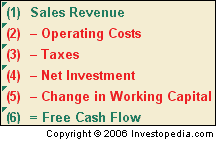
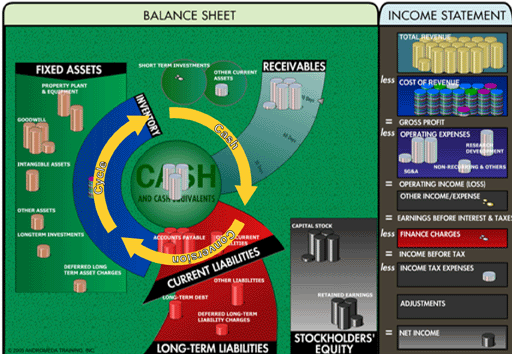
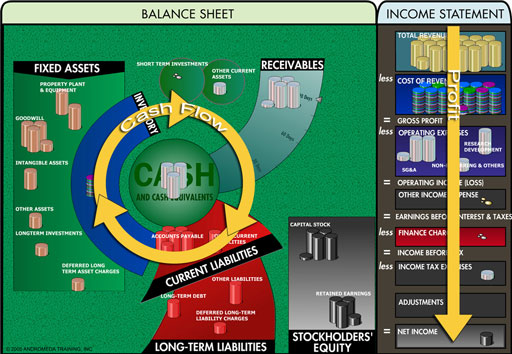
How free cash flow is calculated

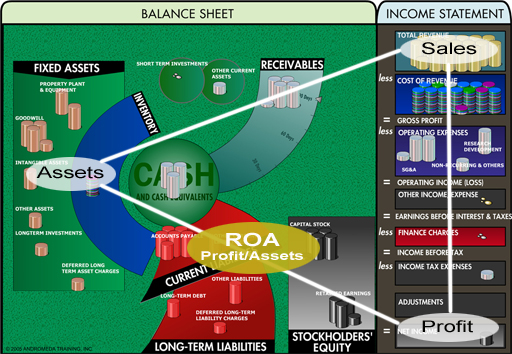
ROA


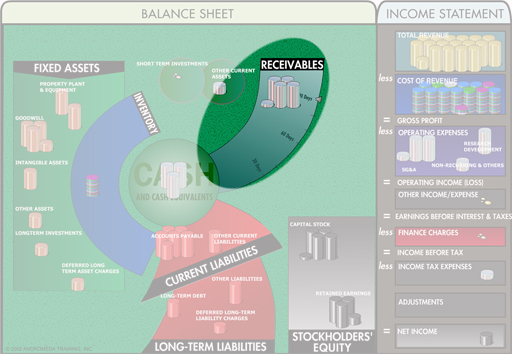
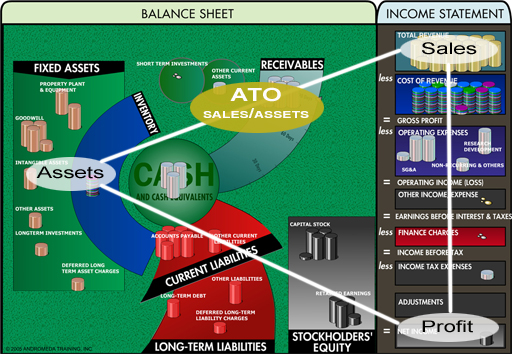
A visual glossary of corporate finance

Discount Cash Flow to determine Intrinsic Value

Free Cash Flow and Return on Equity

ROE and ROIC


" Management is concerned about return on invested capital and return onshareholder equity and that's the focus. Everything else takes a backseat to that. "

Portfolio Management Process

       Our objective is to discover outstanding companies with sustainable, high returns on capital and open-ended growth, then to buy them at a “value” price. Although our investment process is relatively uncommon, it is the same process practiced by all of the portfolio managers at Lateef throughout their careers, and now polished by our collective experience.


our source

       We actively monitor a Lateef universe of about 60 companies that have met our quality criteria, and we assess them daily for attractively priced entry points. A company is purchased only after each portfolio manager agrees that the company has met at least two-thirds (or 17) of our 25 investment criteria. Our investment candidates come from a variety of sources, including discussions with company executives about their respected competitors, suppliers, distributors, and customers. They may come from industry periodicals, industry trade shows, Wall Street investment conferences, Wall Street research, and our colleagues in the industry. We also frequently check the new low lists, and we review data-rich publications such as Value Line. We don’t use a “black box”computer to screen for ideas, as our experience has shown this to be a “rearview mirror” method of discovering companies that are often at their cyclical peak. We have mentally screened hundreds of companies in our careers and have ruled out those which have cut throat competition, are heavily regulated, have a principal product subject to commodity pricing, are capital intensive, or have a short product life cycle. In today’s world, where data is only a few clicks away, the challenge is not in obtaining information, but in transforming information into insights and knowledge that meet our criteria.


our inv process


our process for
       The heart of our investment process is the initial evaluation and ongoing monitoring process of investments. It is the lifeblood of what we do. The following Pyramid of Growth illustrates the essence of our core criteria. Although we have 25 specific investment criteria, they boil down to finding a company with a sustainable competitive advantage and high return on invested capital (ROIC), led by an owner-oriented management team of high integrity, and a track record of success, whose stock is trading at a reasonable or bargain price.


pyramid


                                                        the pyramid

        We rely heavily on our own intensive fundamental research. We visit with the management of the companies in which we invest on their home turf and build relationships with them over the years. We enjoy the “tire kicking” process, and believe the time and effort is worth the reward of a better understanding and deeper conviction in the company and its people. Once managements meet us and realize that we are interested in longer-term strategic and competitive positioning issues, they are often open, responsive and communicative with us. We prefer managements that are accessible, especially when the inevitable rumors or specious analyst downgrades affect the stock price. We need a direct and expedient line of communication to discern truth from misconception to be most effective for our clients.

getting invested

       Our accounts are separately managed and our focus is on absolute returns. Consequently, we will only invest when we believe the company’s market price is attractive compared to its intrinsic value. For new clients, this process may take just a few days – if there are many opportunities in a bear market – or several months, in a bull market. We would rather take our time in making the right choices to limit downside risk than have to apologize later for losses because we responded to an urge to get invested right away. Risk, in our view, is the risk of losing money. We do not define risk as potentially falling behind a bull market benchmark for a few months while the cash is getting invested.
       We invest each account individually and do not manage on a “model.” Managing accounts on a model means that every account is fully invested on the first day and holds the same stocks. Lateef does not manage accounts in this way because we feel that it is imperative to not only buy outstanding companies, but it is equally important to buy those companies at the right price. Therefore, we invest accounts one stock at a time, and we will only purchase when a company is trading at or below our buy target price. When a company drops into our buy range, it is added to each portfolio with cash at approximately a 6% weight. Due to this strict purchase criteria, each account under Lateef’s management may not hold all of the same securities, depending on the inception date of each account. While this process creates a higher dispersion between accounts, we think it makes the most investment sense, ultimately resulting in better performance.


when and how

       The businesses that interest us are those that have a sustainable high return on invested capital (ROIC). With all else being equal, the most valuable businesses are those that deliver more cash flow and income with fewer assets. Return on invested capital is a financial measure that quantifies how much income a business earns relative to the capital contributed by both equity shareholders and lenders. Our composite top 25 holdings have a return on invested capital in excess of 20% – nearly double what the average company earns on capital, and more than double the cost of capital for most companies. For companies with no debt, return on invested capital is simply return on equity, which is defined simply as net income divided by net worth (or equity).
Most investors define a company’s growth rate as the rate at which it increases its earnings per share (EPS). We think this is not only overly simplistic, but sometimes wrong. EPS is a result of many accrual assumptions, which may not correlate to the actual cash generated by the business.
       The true growth of a business is measured by its return on capital. For example, a business that is funded with $1,000 on January 1st and earns $200 in cash for the year has a 20% return on its $1,000 original capital. At the end of the first year, it has $1,200 of retained capital, assuming no dividend payouts. If it earns another 20% on its $1,200 retained capital in year two, it will have earned $240, making its capital at the end of year two $1,440. Extending this 20% compounding forward for 3.8 years will result in total capital of $2,000, or double its original investment.
       We have observed that over time, a company usually trades at a Price-Earnings ratio (PE) in line with its sustainable return on capital. Assume, for instance, that we invest in a company with a sustainable return on capital of 20%, whose stock is depressed for some temporary, nonstructural reason, and has a PE ratio of 15x. The investment should benefit from a “double play” effect. The stock should benefit from a rebound to its normalized PE of 20 as the cloud overhanging the stock evaporates, and then, the stock should benefit from the compounding of the company’s return on capital, thereby increasing its intrinsic value. We limit price risk by patiently waiting for terrific companies (those with sustainable high ROICs) whose stock prices are temporarily out of favor, offering an opportunity for us to pay a PE at a discount to its intrinsic value along with a “double play” opportunity. Well executed “double plays” in a portfolio of 15–20 investments can contribute significantly to investment performance with minimal business and price risk.
       We also measure a company’s return on capital exclusive of any excess cash it may have on its balance sheet, indicating a more robust business profitability. Many of our companies have little or no debt on the balance sheet and have significant cash not needed to run the business.
       Our portfolio companies generate excess cash over and above needed capital spending. We use other valuation metrics as a “sanity check”, such as comparing a company’s cash flow yield to the 10 year treasury bond. We also value companies by comparing a company’s PE ratio relative to its historic ROIC for clues to better estimate the intrinsic value of the company. We might also incorporate a sum-of-the-parts analysis to value companies. After estimating the intrinsic value using these methods, we apply at least a 10% discount to the value to derive our “buy point”, there- by enhancing our margin of safety. For example, if we believe a company is fairly priced at $50, we will not buy it until it drops below $45.
       We take a practical business approach to investing. This approach applies equally whether we’re valuing a neighborhood lemonade stand, the corner grocery store, or General Electric. We believe we are unique in our emphasis on ROIC and, in particular, in using the ratio of PE to ROIC as a guide to valuing companies. Combining this approach with our due diligence to give us the conviction that a company’s competitive advantage is sustainable, along with the discipline to wait for the right market price, gives us the edge to outperform.


when we sell

       Our bias is not to sell. If we must, we reinvest the proceeds only when it makes sense to do so. There are, however, five conditions under which we feel that selling a stock is necessary:

       When a position exceeds 15% of a portfolio. If an investment that typically starts with a 6% weight
       appreciates to 15% of the portfolio, we will consider gradually trimming the position for the sake
       of prudence.

       Overvaluation. If the stock price is egregiously overvalued and discounts earnings excessively into the
       future, we will sell. This was key to our success in preserving capital in the years 2000–2002. We are
       content to hold a modestly overvalued stock if we are confident that future years’ earnings growth will
       justify the valuation.

       Deteriorating fundamentals. For each company we buy, we document our rationale for investing in the
       company. If subsequent events erode its competitive advantage and violate our original rationale,
       we will sell.

       When there’s a better idea with more conviction. If we find a much better business that is attractively
       priced, we will sell to generate cash for the new purchase.When we recognize a mistake. Despite our
       rigorous due diligence process, we do occasionally make mistakes in assessing the management or
       competitive dynamics of a company. When this happens, we immediately sell to limit losses and move
       on to a better opportunity.

       When we recognize a mistake. Despite our rigorous due diligence process, we do occasionally make
       mistakes in assessing the management or competitive dynamics of a company. When this happens,
       we immediately sell to limit losses and move on to a better opportunity.


we take a

Quality, Value and Management Approach (QVM approach)