Tuesday, 22 December 2009

Hai-O 2Q net profit surges 85% to RM20.18m

Hai-O 2Q net profit surges 85% to RM20.18m
Written by Joseph Chin
Tuesday, 22 December 2009 19:51

KUALA LUMPUR: HAI-O ENTERPRISE BHD [] reported net profit of RM20.18 million in its second quarter ended Oct 31, 2009, a jump of 85% from RM10.89 million a year ago as more consumers bought its health and wellness products.

It said on Tuesday, Dec 22 revenue rose 51% to RM132.37 million from RM87.29 million. Earnings per share were 24.23 sen compared with 13.38 sen. It declared dividend of 10 sen per share.

"The increase in profit after taxation was mainly due to higher contributions from all main divisions. The recovery of the domestic market had increased in consumer spending which had boosted the sales of the group's health and wellness products in the second quarter," it said.

Additional increase in other income earned which included realisation of exchange fluctuation reserve on disposal of foreign associates amounting to RM624,799 had contributed to the increase in profit.

For the first half, Hai-O said revenue rose 40% to RM280.95 million from RM200.20 million a year ago, mainly due to higher sales generated by its principal subsidiaries, the multi-level marketing and retail divisions, and higher rental income generated during the financial period.

Net profit increased by about 58% from RM24.73 million to RM38.97 million due to higher revenue achieved as mentioned above. Despite lower revenue achieved by the wholesale division, it had registered higher profit by focusing on higher margin product sales.

"The MLM division had contributed over 80% of group revenue, due to its effective A&P strategies coupled with attractive overseas incentive trips and strong newly recruited distributors' force.

"Additional contribution from the retail division due to higher revenue achieved coupled with the success in its house brand products had also contributed to the increase in profit," it added.

http://www.theedgemalaysia.com/business-news/156170-hai-o-2q-net-profit-surges-85-to-rm2018m.html


Last 4 quarters results of HaiO
http://spreadsheets.google.com/pub?key=tyxw8H8-rMbZwslu4WAXkog&output=html


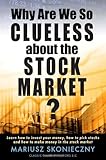
Why Are We So Clueless about the Stock Market?

Books Of Knowledge


Why Are We So Clueless about the Stock Market? Learn how to invest your money, how to pick stocks, and how to make money in the stock market

The purpose of this book is to help readers understand the basics of stock market investing. Material covered includes the difference between stocks and businesses, what constitutes a good business, when to buy and sell stocks, and how to value individual stocks. The book also includes a chapter covering four case studies as well as a supplemental chapter on the pros and cons of real estate versus stock market investing….


Posted in Business and Investing

Jeff Lippincott says:
December 20, 2009 at 10:08 am
This book was OK. It was short, slick, and clearly a marketing piece for the author’s fledgling investment management firm. From the mug shot of the author on the back cover of the book it appears he’s a recent college graduate who is starting his own LLC since there are probably no jobs available to him. But that doesn’t mean he doesn’t know how to be successful playing the stock market. You don’t need any formal education to be successful at picking stocks.

The book basically has 14 chapters as follows:

1. Stocks vs. businesses


2. How do businesses make investors wealthy?


3. What is a good business?


4. When to buy


5. How to value a company


6. Basic capital structure


7. Diversification


8. Economy


9. Investing in IPOs


10. Analyzing investments


11. When to sell


12. Case studies


13. Conclusion

A. Real estate or stocks – which is a better investment?

The 14th chapter (appendix) probably should have been inserted up higher (maybe after Chapter 1?). And chapter 2 probably should have been renamed “How do investments make investors wealthy?”

In my humble opinion the title of the book was lousy. Many people are clueless about the stock market. But after reading this book I doubt the reader will be less clueless as to how to actually make money at the stock market. What we read about in this book is common sense. Investors make money by generating profits with their capital. And if the ROI (return on investment) is significant, then they get significant profits.

In a perfect world where everyone has access to all information, then you can implement what the author preaches in this little tome. Unfortunately we do not live in a perfect world, and rarely is it possible to accurately put a value on a plot of land, a business, or a stock certificate. The world is corrupt, it’s unethical, fraudulent, and getting the real story or facts about something usually costs more than it is worth. Remember that time is money.

The clueless after reading this book might be inclined to say to themselves: Hey, the author has done a nice job of explaining stocks to me – so why not let him pick the stocks and I’ll give him a professional fee for his services. If this is you, then the author has accomplished what seemed to be his goal in writing this book. However, if you wanted to truly be knowledgeable about the stock market and want to try and use it to your advantage, then you’ll need to read a lot of other books. And even then you will probably still be clueless.

Warren Buffet has been so successful in playing the stock market because he is not just an investor. He certainly invests, but then he gets involved with the management of his investment vehicles to make them grow and become more profitable. In effect he hedges his bets. Having said this, I think it is much smarter to stay out of the stock market and build your own companies, systematize them, put them on auto pilot or sell them, and then build another and another and another. That way you can invest in a way similar to Warren Buffet method. But buying stocks when other people are manipulating things is very risky. And it is difficult to beat the average returns earned on Wall Street because of all the smoke screens. 3 stars!
Rating: 3 / 5

D. Buxman says:
December 20, 2009 at 11:36 am
If you don’t know anything about the stock market and you want to make intelligent choices, this book is for you. The information provided is practical and straight-forward, without a lot of fluff or useless mathematical formulas. The presentation is easy to understand and apply to your individual investment plan. In the final analysis, successful investing for the long term is possible utilizing the principles outlined in this book. This is not a get rich quick sham, but rather a sensible, conservative approach that limits risk and maximizes reward.
Rating: 5 / 5

Livin' La Vida Low-Carb Man says:
December 20, 2009 at 1:30 pm
I’m the first to admit that the stock market intimidates me. I’ve watched certain stocks go up and down like a rollercoaster in just a matter of months and wondering what it would be like to take a chance and invest some of my hard-earned capital in a company I support. With big names like Wal-Mart, AT&T, and Apple showing a strong history of financial strength, are they good investments for my portfolio if and when I decide to take the plunge? This is just a sampling of the kinds of information you get in this book written by financial investment firm veteran Mariusz Skonieczny.

The skills that are taught in this book are not novel, but they do help professionals in other business sectors understand how to be smart about what stocks they put their money in, when to buy, when to sell, and making the most of their resources. Discovering the up-and-coming companies and ditching the down-and-outers is ESSENTIAL to becoming a savvy investor. Knowing the difference between the two can be tricky when you don’t know what to look for. This book will help you tell them apart.
Rating: 5 / 5

ShadowStock says:
December 20, 2009 at 3:33 pm
This book provides a clear and concise explanation of many critical principles and ideas to value a stock or a private company. Anyone beginning their journey in the stock market will benefits from the clear examples. Even the more experienced could benefit with a refresher on investment concepts simply forgot or just never fully understood their importance.

Mauriusz Skonieczny succinctly provides many short clear examples of the economic impact of capital allocation decisions such as expanding the business, reinvesting in the business, share buybacks, debt reduction, or dividends. The book also covers concepts such as identifying economic moats, margin of safety, stock valuation with clear examples of discounting future cash flows.

Many other ideas are crammed into the book such as when to sell, company analysis, capital structure, diversification, investing in IPOs, analyzing an investment, real estate versus stocks along with other nuggets of useful ideas for anyone.

I highly recommend this book for the less experienced and others looking for a clearer explanation of the most important stock valuation concepts.

[...]

Rating: 5 / 5

Ravi Nagarajan says:
December 20, 2009 at 3:41 pm
Those of us who allocate capital for a living are probably familiar with fielding the following types of questions at social events, particularly during the holiday season:

“So, what hot stock can you recommend?”


“What do you think about [random stock that recently had a huge run]?”


“How did your investments perform last quarter compared to the market?”


“My portfolio is up 25% this month … How does your portfolio compare?”

For those who do not want to be perceived as rude and obnoxious, some type of response is usually required. The individual asking such questions is not doing so in order to appear uninformed and most likely has no exposure to the basics of investing. Such investors really need a primer on basic investment concepts and techniques. Even if they never invest any money on their own, basic knowledge is required to intelligently interact with hired professional managers.

A Beginner’s Guide to the Stock Market

Why Are We Clueless about the Stock Market?Mariusz Skonieczny has written a worthwhile beginner’s guide to the stock market in his book Why Are We So Clueless about the Stock Market? The book’s audience appears to be those who are entirely new to business and investing concepts such as how businesses are capitalized and earn money from activities. Starting with a simple illustration of a Lemonade Stand’s balance sheet and income statement, Mr. Skonieczny walks the beginner through a number of basic scenarios regarding capital structures, return on equity, and the impact of competitors entering the market. Additionally, he provides a clear explanation of the power of compound interest which remains one of the least understood basic concepts of finance.

The Concept of Moats

The question of what qualities represent a “good business” is critical for those interested in handling their own investments. In illustrations that could be understood by any intelligent high school student, Mr. Skonieczny clearly shows the difference between businesses that create and destroy value. He also introduces the concept of opportunity cost and provides explanations of the key factors that sustain moats: Intangible assets, switching costs, network effects, and cost advantages.

Valuation

The chapter on valuation is quite basic but conveys enough information for a beginning investor to get started. The concept of compound growth is cleverly illustrated by comparing progress in net worth to an “elevator”. By avoiding compound interest equations and using illustrations, the discussion could be less intimidating to beginners. Through these illustrations, the book also explains the concept of discount rates.

Mr. Skonieczny also presents a simple valuation spreadsheet model which calculates intrinsic value based on a dividend discount model. While this model is clearly susceptible to the inability of most investors to forecast earnings or cash flow for distant periods in the future, it illustrates an important finance concept in a way that beginners can understand. One might worry that new investors could gain unwarranted confidence by coming up with seemingly precise forecasts of future earnings and plugging assumptions into a spreadsheet. However, attempts are made to explain such risks.

Capital Structure

The concept of capital structure and use of leverage is poorly understood by most investors. Again using simple illustrations, a chapter is provided that shows the impact of different mixes of equity and debt on a business. The fact that financial leverage is a double edged sword is obvious to experienced investors but not to beginners so more scenarios are provided which demonstrate how equity can be easily wiped out if a business carries too much debt and falls on hard times.

Case Study on Burlington Northern

Case studies using actual examples from earlier this year are presented in one of the later chapters. Interestingly, one of the case studies examines Burlington Northern which is expected to be acquired by Berkshire Hathaway early next year. The book was published prior to the announcement. The book also includes case studies on Moody’s, Thor Industries, and Wells Fargo. While fairly rudimentary, these examples show how the concepts discussed in the book can be applied to actual investment scenarios.

A Worthwhile Quick Read

This book is a worthwhile quick read for beginning investors. While it is definitely not a substitute for classics such as Ben Graham’s The Intelligent Investor, Mr. Skonieczny’s book can serve an important role by introducing new investors to basic concepts and serving as a starting point for further study.

The book could have been improved by providing an index as well as a list of suggested reading for those who wish to take the next step. In addition, the book’s title may be an obstacle for those who are thinking about gifts for friends, family, or clients who could use a basic primer on investing. After all, few of the folks asking you about last quarter’s performance or the next hot stock think that they are “clueless” about the stock market! It could be awkward giving this book as a gift for people who might be “clueless” but don’t recognize that fact. However, on balance, the substance of the book is very valuable and recommended for new investors.
Rating: 5 / 5


http://www.stanchee.com/why-are-we-so-clueless-about-the-stock-market-learn-how-to-invest-your-money-how-to-pick-stocks-and-how-to-make-money-in-the-stock-market/

Govt said planning compulsory acquisition of land

Govt said planning compulsory acquisition of land
By Vasantha Ganesan
Published: 2009/12/22


The government plans to compulsorily buy a piece of land measuring 0.38ha on Jalan Tun Razak, Kuala Lumpur, from property developer IGB Corp Bhd (1597).

The land is near Megan Phileo Promenade and a stone's throw from the Petronas Twin Towers.

Should the government pay the prevailing price of around RM1,200 per sq ft for the piece of land, the land may be sold for some RM40 million, a source said.

It is understood that the government may build a fire station on that location.

"IGB has already received a development order to build 166 units of high-end service apartments with 200,000 sq ft of net saleable area," a source told Business Times.

The source added that IGB hopes to get at least RM1,200 per sq ft, given that land prices in vicinity of the Kuala Lumpur City Centre ranges from RM1,900 to RM2,200 per sq ft.

Should IGB be paid RM1,200 per sq ft, it may get some RM40 million from the government.

"The project is in the pipeline, but it has not been launched yet," another source said.

Citigroup in a research report dated December 16 said that the book cost for the land is RM6.4 million or RM156 per sq ft.

"Typically, compulsory acquisition is done at market price (but what is the market price is also subjective) ... In the property market report, the last transaction in the KLCC area (off Jalan Tun Razak) was close to RM1,500 per sq ft," the report said.

It added that should the land be sold at RM1,200 per sq ft, IGB has a potential after tax-gain of RM32 million.

http://www.btimes.com.my/Current_News/BTIMES/articles/igbforce/Article/index_html

Hong Leong may yet seal EONCap deal

Hong Leong may yet seal EONCap deal
By Chong Pooi Koon
Published: 2009/12/22


Hong Kong-based Primus Pacific Partners may not be fond of Hong Leong's bid but its options appear limited

HONG Leong Bank Bhd (5819) may see through its deal to buy smaller rival EON Capital Bhd (EONCap), even without unanimous support from the latter's fragmented shareholders, analysts said.

Primus Pacific Partners Ltd, a Hong Kong-based investment firm that had paid RM9.55 per share for its 20.2 per cent stake in EONCap last year, may not be fond of Hong Leong's bid but its options appear limited.

Primus will need a high price to exit, but Hong Leong, controlled by shrewd investor Tan Sri Quek Leng Chan, is not known to overpay in deals.

"It will be tough for Primus. It's an uphill struggle for them," a banking analyst said.

Despite it being the single largest EONCap shareholder, Primus could be easily eclipsed by other major shareholders whose stakes, when added up, are way bigger.

It is believed that Tan Sri Tiong Hiew King, who holds a 16.3 per cent stake in EONCap, and Singaporean businessman Rin Kei Mei, with another 11.1 per cent, are ready to talk to Hong Leong.

Combined with Khazanah Nasional Bhd's 10 per cent stake, they will together control 37 per cent of EONCap, which is more than sufficient to trigger a general offer for the remaining shares, HwangDBS Vickers Research noted.

The Employees Provident Fund owns another 11.9 per cent of EONCap.

"Let's not forget about the minority shareholders who have roughly 30 per cent combined. This is a good exit strategy for them as they will never see a price as high as RM9.55 as Primus had paid," another analyst said, who estimated that a price of slightly above RM7 per share could be fair for "everybody except Primus".

Shares of EONCap jumped 4.6 per cent yesterday to close at RM6.88, retreating from an earlier gain in the day.

Hong Leong Bank could opt to buy EONCap's assets and liabilities under the takeover rules, where it would only need 50 per cent plus one EONCap share vote by value for the deal to go through, HwangDBS said.

This will be a less messy structure and Hong Leong will not need to worry about Primus being the deal breaker.

Primus also lacks a strong bargaining chip. While a merger could give Hong Leong greater scale and size to meet its aspirations as a regional player, it is likely to walk away and focus on building growth elsewhere if the price is expensive.

Hong Leong has already made solid forays into China and Vietnam, while it is eyeing to enter Indonesia and Thailand.

"These options in high growth, higher margin countries will be better bets for success for Hong Leong," HwangDBS said.

http://www.btimes.com.my/Current_News/BTIMES/articles/ionn/Article/index_html

KPJ Healthcare targets RM2b revenue in 2012

KPJ Healthcare targets RM2b revenue in 2012
Published: 2009/12/22

KPJ Healthcare Bhd (5878), the largest operator of private hospitals in Malaysia, has target its annual revenue to reach RM2 billion in 2012 through the continued expansion of operations throughout the country.

According to its chairman Tan Sri Muhammad Ali Hashim, the company will expand operations in the country either organically, by takeovers or building new hospitals.

"Through this continuous expansion of operations,we are confident of achieving an annual revenue of RM2 billion in 2012," he told reporters after the company's Extraordinary General Meeting (EGM) in Johor Baru yesterday.

He said the company had allocated RM150 million for capital expenditure this year and a similar amount would be spent next year for the same purpose.

The company's performance for the first nine months until September 30 2009 showed it had achieved revenue of RM1.07 billion and a net profit of RM80.57 million, compared to RM944.8 million and RM67 million for the same period last year.

KPJ, a subsidiary of the Johor Corporation owns 19 hospitals in Malaysia and two in Indonesia.

Muhammad Ali said the company had increased its network of hospitals with the JPJ Penang Specialist Hospital which began operations in August, while the Tawakal Hospital Kuala Lumpur which is moving to a new building, is expected to open in the first quarter of next year.

He also said that KPJ is building a new hospital in Klang, Selangor, which is expected to be open for operations in 15 months.

He said on December 16, the company had announced its move to take over the Maharani Specialist Hospital costing RM22 million in Muar, with another RM30 million being spent to develop it.

On its overseas operations, he said, the company's board of directors will re-evaluate investments in Bangladesh and Saudi Arabia following the current international financial crisis.

KPJ owns two hospitals in Indonesia, the RS Medika Permata Hijau and RS Bumi Serpong Damai. Both are located in Jakarta.

The company also operates a hospital in Padang, the Rumah Sakit Selasih, which was badly damaged by the recent earthquake which hit the region.

Earlier at its EGM, KPJ received approval from its shareholders to proceed with its proposed share split, bonus and warrant issue.

The proposed exercise involves the sub-division of one ordinary share of RM1.00 each in KPJ into two ordinary shares of RM0.50 each in KPJ, followed by a 1-for-4 bonus issue and a subsequent 1-for4-free warrant issue. - Bernama

Will 2010 be a good year for stock investors?

Will 2010 be a good year for stock investors?

The world markets have just recovered from a rather long and severe bear market. The recession has been severe. During this period, economic growth stalled and unemployment rose. Many companies and individuals went bankrupt. Many restructured, cutting cost, reducing excess capacity, conserve cash, sacked staffs, and so on, to remain and to survive. This phase has resulted in many surviving firms reporting a turnaround in their profits. This is reflected in the rise in stock markets. Going forward, these companies will consolidate and strategies for growth will be implemented. It is anticipated that the world economy will grow by 3% next year.

The interest rates of US, Japan and Europe are anticipated to remain low next year. Though their economies are anticipated to grow, these low rates will remain so as not to stifle their initial growths. As for the other countries, some have already raised their interest rates due to their improving economies.

The early rise in interest rate in these countries should be welcomed. The improving economies have enabled these governments to remove the stimulus ("medicine") needed to revive their economies the previous two years. Investors need not fear as equities have done well during these early periods of rising interest rates. Later rises in the interest rates should be viewed more cautiously as they probably are implemented to control rising inflation.

The interest yield curve is the difference between the interest rate of the 10 year treasury note and the 2 year treasury note. It is steepening. Some countries will deliberately keep interest rate low and their currency values competitive to stimulate their economy. The major economies using this policy will see their currencies used for carry trades round the world.

Due to the low interest rate policies and large liquidities the last two years, there is real fear of bubbles created in various asset classes, particularly in properties in certain countries. These countries will need to tackle these lest these lead to future problems. Bursting of bubbles will always be a risk to their economies. (Look at Dubai.)

The market has given good returns to investors since March 2009. The stock market has gone up substantially but it is neither frothy nor bubbly. Though a correction will be welcomed by many, long term investors continue to find values even in the present market. Buying a good stock at a bargain or a fair price requires due diligent and hard work. Good luck for 2010.

Monday, 21 December 2009

Maybank has little exposure to Dubai, says Wahid

Maybank has little exposure to Dubai, says Wahid

Tags: An Binh Bank | Dubai | Maybank

Written by Siti Sakinah Abd Latif & Max Koh
Thursday, 17 December 2009 21:13

KUALA LUMPUR: MALAYAN BANKING BHD [] will not be affected by Dubai's debt crisis given its exposure there of less than 0.2% of the banking group's total assets, said its CEO Datuk Seri Abdul Wahid Omar. (Comment:  Total assets of Maybank as at Sept 30, 2009 was RM 317,041 mil.  The 0.2% of this was RM 634.082 million).
 Wahid said the bank's exposure in Dubai was being monitored by its branches in Bahrain and London.

"We are hopeful that the issue in Dubai will be resolved. Abu Dhabi has lent US$10 billion [RM34.2 billion] to enable Nakheel to repay its bond debt, which is a positive development," Wahid told reporters on Dec 17 after a signing ceremony between Maybank and MoneyTree (M) Sdn Bhd for the sponsorship of a year-long financial-literacy programme for youngsters.

He said the development in Dubai would bring back significant confidence and stability to financial markets.

It had been reported that Abu Dhabi recently provided the amount to Dubai to help Dubai World, the state-owned holding company, avoid defaulting on a US$4.1 billion Nakheel bond payment.

On another matter, Abdul Wahid said Maybank had received the final approval from the Vietnamese authorities to increase its stake in An Binh Bank from 15% to 20%.

When Maybank bought its 15% stake in An Binh in March 2008, it was given the option to increase the stake to 20%, which is the highest stake that a foreign company is allowed to hold in Vietnam.

"We are now in the process of finalising the agreement," Wahid said.

On the bank's outlook for next year, Wahid said Maybank was bullish about 2010's economic prospects, adding that its in-house economist had forecast 4.5% growth.

"I think as we recover, obviously, we expect the financial industry to perform well as well," he said.

He said the country's asset policy would continue to create a conducive environment for business.

Adventa rises on higher earnings outlook

Adventa rises on higher earnings outlook

Tags: Adventa | earnings | OSK Research | Top Glove

Written by Joseph Chin
Monday, 21 December 2009 11:39

KUALA LUMPUR: Shares of Adventa rose in morning trade on Monday, Dec 21 on expectations of higher earnings for its fourth quarter results (4QFY09) to be released on Tuesday and after OSK Investment Research raised the target price from RM1.87 to RM3.58.

At 11.30am, the share price had risen six sen to RM2.94. There were 1.408 million shares done at prices ranging from RM2.89 and RM2.94.

OSK Research said it expected the earnings to be slightly better on-quarter, judging from the solid performance earlier of its peer, Top Glove.

"Also, we understand that this would be the last quarter for recognition of the company's foreign exchange losses which should still amount to approximately RM4 million. Moving into FY10, Adventa is looking to capacity expansion again.

"We are upgrading our FY10 earnings by 42% in line with the improved numbers sans forex loss. Maintain Buy with a higher target price of RM3.58 (previously RM1.87)," it said.

A general guide to investing:

As a general guide to investing:

Every 5 years, one can expect 4 good years and 1 bad year.

For every 5 stocks selected and bought, 1 will perform poorly, 3 will be average and 1 will outperform.

The aim of diversification is ensuring wins are more than enough to cover the losses.

Remember to sell the losers and let the winners ride.

Aim for a return of portfolio investment of 15% or more per annum.

CHEAH CHENG HYE, 'Warren Buffett of the East'

December 21, 2009
CHEAH CHENG HYE, 'Warren Buffett of the East'

  • “We are far from infallible. I’ve done a study of our decision-making process going back to 1993 and found that one third of the time, we made mistakes. One third were good moves and one third were neutral.”

  • But in equity investing, it is stellar performance if you make lots of money on the decisions that turned out fine and lost not too much on those that went sour.

  • In terms of client categories, about 82 per cent of all the assets under management came from institutions such as insurance companies, banks and conglomerates.

  • The sparkling performance numbers: Value Partners has delivered a 16 per cent per annum compounded gain to its clients since 1993 when it was founded.

  • In the last 10 years, including the disastrous 2008, the gain was 20.3 per cent a year compounded.

  • On a yearly basis, Value Partners Classic Fund has made money in 12 out of the last 16 years of its existence.

  • Last year was one of those four terrible years. The fund lost 47.9 per cent net – and that’s after selling down some stocks ahead of the crisis turning full blown.

  • Last year aside, why is that intense analysis of reams of financial statements, lots of visits to companies and interviews with management can still lead an investor like Value Partners to make wrong conclusions about some stocks?

  • In Mr Cheah’s words: corporate governance.  “If you isolate the mistakes of Value Partners, the single largest reason we find is our poor judgment of management’s integrity and quality. We thought the guy was honest but he turned out to be a crook.”

  • He agreed to a suggestion that there’s randomness in the market, adding: “Yes, and the bad guys also come up with new ways to fool you!”

  • The corporate governance challenge is not absent but is far less pressing when it comes to investing in China companies listed in Hong Kong. “It is a well regulated market. People have learnt the hard way that it makes no sense to ‘play a fool’ with Hong Kong regulators, as they will come down hard on you,” said Mr Cheah.

  • “The average investor should only put a proportion of his money into equities. I believe that the potential risk-versus-opportunity situation today does not encourage an all-equity approach,” said Mr Cheah.

  • “For myself, I would want to have a spread of money in cash, tangible assets like gold, and equities spread across different classes and geographic regions. No one can predict with any certainty what the world will be like two to three years from now.”

  • I believe it should be in China-related stocks. I look at the map of the world and I’m unable to find any other major equity market that excites me or fills me with hope. This is a market I know very well: I have devoted 20 years of my life to it.”

  • And among the important things that he is sure of, it is that the renminbi is going to resume its rise.

  • In the longer-term, China has to reinvent is economy from being export-dependent to being underpinned by domestic demand. The country’s policy direction is pushing China banks to lend out more money, which could sow the seeds of bad loans in two or three years from now, according to Mr Cheah.

  • “In the last couple of years, we have done about 2,000 company visits a year – excluding phone calls. We have done this in good and bad times. We have 18 full-time professionals, whose average age is in the early 30s. As far as I know, we do more company visits than any China team in the world.”

  • Value Partners deems itself to be a value investor seeking stocks with low price-earnings ratios and high dividend yields of at least five per cent. Whichever industry it finds such stocks, it will buy them.

  • “We don’t limit our stock picks to any industry. Our job is to buy the 3Rs – the right business run by the right people and selling at the right price. At the moment we are finding the 3Rs in a broad spectrum of businesses across China.”

  • “As a former journalist, I had an advantage over people who were purely financial people. I learnt to put events in a historical, political and social context. Many people with CFAs or MBAs are narrow in that they tend to interpret reality through quantitative and statistical analysis.”

  • If there’s one area he hasn’t quite succeeded in, it’s learning Mandarin. “My Mandarin is no good. I have a vocabulary of probably only 2,000 words. I took tuition but have seldom stayed more four or six months in any particular class before dropping out.

  • For his part, Mr Cheah said that unlike most people who sought to make as much money as possible, he “had always come from the opposite angle - that you must be passionate about what you do and be very good in it. The money will come naturally.”


http://mystockfolio.blogspot.com/2009/12/cheah-cheng-hye-warren-buffett-of-east.html?utm_source=feedburner&utm_medium=feed&utm_campaign=Feed%3A+MyMalaysiaStockfolio+%28My+Malaysia+Stockfolio%29

Does Everyone Lose in a Crash?

Does Everyone Lose in a Crash?

It’s quite common to hear someone grumbling about how much money they lost on a stock, but did you ever stop to think where that money went?

Contrary to popular opinion, that money is far from lost. In fact, that money was won by a professional trader who profited from the stock’s decline! Sophisticated traders such as these are called the “smart money” because they profit regardless if the market is crashing or booming. The smart money wins most of the money lost by the “dumb money”, or the “average joe” amateur investor. By learning how to trade like the smart money, you can profit tremendously in any type of market. Let’s learn the differences between the two types of traders:

According to the National American Securities Administrators Association, more than 70% of traders will lose nearly all their money! This is solid proof that the majority of traders and investors are dumb money.

What is the Dumb Money Doing Wrong?

First and foremost, the dumb money act as a herd or mob. This group exhibits very little individual decision making. This is exemplified by how the herd follows the financial news so religiously. The financial news is a severe lagging indicator. This is because reporters only report after the fact. It is so silly that people actually think they will gain knowledge that will allow them to have “the edge” in the markets. This isn’t possible because millions of other competing investors are watching the same news! The news is notoriously bullish right before a bear market and bearish right before the market starts soaring.

http://www.stock-market-crash.net/zero-sum.htm

The Nikkei Bubble: Can a bear market last for 14 straight years?

The Nikkei Bubble

Can a bear market last for 14 straight years? Well, this is exactly what occurred in Japan, starting in 1991.


After World War II, Japan was devastated-several of its major cities were obliterated and its economy was virtually nonexistent. Due to much effort and hard work, the Japanese economy slowly began to stabilize and recover. Additionally, the United States helped Japan rebuild, and provided capital and military protection, as well. The value of military protection should not be overlooked, as this is usually the highest expense of any government. This benefit allowed the Japanese economy and government run more freely and efficiently.

Factories were quickly built and peasants became factory workers. Middle and upper class men became white collar workers, called salarymen. Salarymen and factory workers were offered lifetime employment. This caused salarymen to have fierce loyalty towards their employers. Most Japanese workers at the time were highly frugal, saving much of what they earned. Many companies merged together to become large industrial and banking conglomerates, called zaibatsu.

The zaibatsu gained their competitive edge by copying and improving Western products and selling them for much cheaper. The cheaper products won Western customers and started to hurt US companies. Tremendous economic growth occurred allowing the zaibatsu to evolve into even larger business alliances, called keiretsu. The keiretsu philosophy was one of cooperation, where all facets of business and government worked hand in hand. As the Japanese stock market soared, the keiretsu purchased each other’s shares.

http://www.stock-market-crash.net/nikkei.htm

Meaningful Position Sizing

Meaningful Position Sizing


‘Risk no more than you can afford to lose and also risk enough so that a win is meaningful.’


Don't carry large positions which you cannot afford. Sell down until you can sleep better.


It is sensible not to put all your eggs in one basket. The reverse is also true: as a general rule, you should not diversify too much either. Keep your position sizes meaningful.


Sticking to fewer stocks and spending more time on the selection process will increase your discipline and your focus.  Some of the advantages are:
  • You don’t lose focus.
  • The fewer positions force you to be disciplined and do your homework.
  • You are forced to focus on the better fundamental stocks with potentials.
  • You have no excuses for monitoring your stocks.
  • If there are two stocks you could choose from go with the better one.

Debt and Leverage: Financial weapon of mass destruction

When Genius Failed
By Roger Lowenstein


When Genius Failed, by Roger Lowenstein, is the detailed history of the rise and tragic fall of Long-Term Capital Management (LTCM).LTCM was a hedge fund that brought the financial world to its knees when it lost $4 billion trading exotic derivatives.

In its heyday, LTCM was run almost entirely by PhD’s and other extremely high level academics-the best and brightest on Wall Street. Several of its members were Nobel economists- Myron Scholes and Robert Merton. These academics relied heavily upon statistical modeling to discover how markets behave. At first, these models performed beautifully and the fund was up over 30% each year for several years.

Many Wall Street banks became investors as they considered Long-Term to be making riskless profits! Of course this is foolhardy, but blind faith was bestowed upon LTCM because of the pedigree of its creators.

Roger Lowenstein explains how Long-Term became arrogant due to its success and eventually leveraged $4 billion into $100 billion in assets. This $100 billion became collateral for $1.2 trillion in derivatives exposure! With this kind of financial leverage even the most minute market move against you can wipe you out several times over. Talk about financial weapons of mass destruction! This risk did not deter Long-Term, though.

Finally in 1998, Russia defaulted on its bonds- many of which Long-Term owned. This default stirred up the world’s financial markets in a way that caused many additional losing trades for Long-Term.

By the spring of 1998, LTCM was losing several hundred million dollars per day. What did LTCM’s brilliant financial models say about all of this? The models recommended waiting out the storm.

By August 1998, LTCM had burned through almost all of its $4 billion in capital. At this point LTCM tried to exit its trades, but found it impossible, as traders all over the world were trying to exit as well.

With $1.2 trillion dollars at risk, the economy could have been devastated if LTCM’s losses continued to run its course. After much discussion, the Federal Reserve and Wall Street’s largest investment banks decided to rescue Long-Term. The banks ended up losing several hundred million dollars each.

What became of Long-Terms founders? Were they jailed or banned from the financial world? No. They went on to start another hedge fund!

http://www.stock-market-crash.net/book/genius.htm

Also read:
http://practical-ta.blogspot.com/?expref=next-blog
http://findarticles.com/p/articles/mi_m1316/is_9_32/ai_65160621/


Click here to read a summary:

Sunday, 20 December 2009

Why shares beat property

Why shares beat property
How many realise that shares remain ahead of property over the past quarter century?

Ian Cowie
Published: 7:42AM GMT 18 Dec 2009

Short of a miraculous surge in the stock market, the end of this month will mark the close of a dismal decade for shares.

Most investors know that the FTSE 100 has never revisited the peak of 6,930 it briefly hit on December 30 1999. But how many realise that shares remain ahead of property over the past quarter century?

Yes, you may very well stretch your eyes. I did, too, when Andrew Bell, head of research at Rensburg Sheppards Investment Managers, first told me.

I was almost as surprised when his graceful consultant, Jain Castiau, talked me into taking a dawn dip with her in the near-freezing waters of the Serpentine this week. At least it wasn't snowing at the time but, hey, that's another story.

Back to the statistics. The comparison, as you can see from the graph on this page, is based on the Halifax house price index and the FTSE 100 total returns index; both being the best-known benchmarks for their respective assets.

Or nearly. Because, as sharp-eyed readers will already have noticed, this version of the Footsie is the "total returns" version. In other words, it includes dividend income.

That is an important difference from the most widely quoted form of the Footsie which, for the purposes of simplicity, only measures changes in capital value or share prices, excluding dividends.

That goes a long way toward explaining why so many people underestimate the value of shares and share-based funds as a means of storing wealth.

Dividends are an important part of the total returns from most shares, but they are completely excluded from the simple snapshots of changes in capital values that form the basis of most television and tabloid stock market analysis.

No wonder the figures look so bad because they are so wrong.

Even after this year's splendid stock market rally, the Footsie is still yielding a shade under 3.4pc. That is, dividends expressed as a percentage of share prices averaged across the 100 stocks in this benchmark index.

So, for example, even if share prices remained frozen for 20 years, you would double your money in less than that time simply by reinvesting dividend income.

Bear in mind that income paid by equities is quoted net of basic rate tax – so most investors would need gross returns of 4.25pc and high earners would need 5.6pc to match the yield on the Footsie.

Few bank or building society deposits pay that much income – although, unlike shares, they do provide a capital guarantee. Bonds and bond funds often pay more – although, unlike shares, fixed interest securities are very vulnerable to inflation.

All things considered, it is daft to ignore dividend income when measuring returns from shares. For starters, the full picture demolishes the cliche of a ''lost decade for shareholders''.

What's that I hear you say? When comparing housing and shares it would be totally unfair to include income from one asset, but not the other. Too true. Mr Bell was scrupulously fair and has factored into his calculation a 5pc rental yield on property, less 1pc maintenance costs.

That's even fairer to bricks and mortar than it sounds because the Investment Property Databank UK Residential Index is currently yielding only 3.2pc gross and, of course, it is much easier to reinvest relatively small sums of income in shares than it is to buy tiny bits of houses.

Needless to say, the total returns from any asset would be much lower if you failed to promptly reinvest income because the compounding effect, so marked over long periods of time, would be absent.

Against all that, it just doesn't feel right to say shares have proved a better bet than bricks and mortar over the past quarter century.

Most shareholders are also homeowners and, while equities have delivered higher returns than most media coverage would suggest, I would hazard the guess that bricks and mortar have contributed more to the total wealth of the majority of homeowners than equities did.

The explanation is gearing. Until recently, almost anyone could fill in a few forms and borrow 100pc of their investment in housing. Such easy credit has never been available for shares.

And, of course, stock-market profits are generally subject to capital gains tax – unless you obtain them via an individual savings account or pension – whereas gains on your home are always CGT-free.

Even so, Mr Bell's comparison remains surprising and encouraging at a time when so much analysis of the stock market is merely depressing.

And it is always true – as I recalled while splashing through the gelid lake in Hyde Park this week – that the more you look, the more you see.

http://www.telegraph.co.uk/finance/personalfinance/comment/iancowie/6836526/Why-shares-beat-property.html